
The Definitive Guide to a Healthy Home
A science-based, prevention-first blueprint for creating a home that supports long-term health
What Is a Healthy Home?
A healthy home is not defined by trendy décor, air purifiers alone, or a few “non-toxic” swaps.
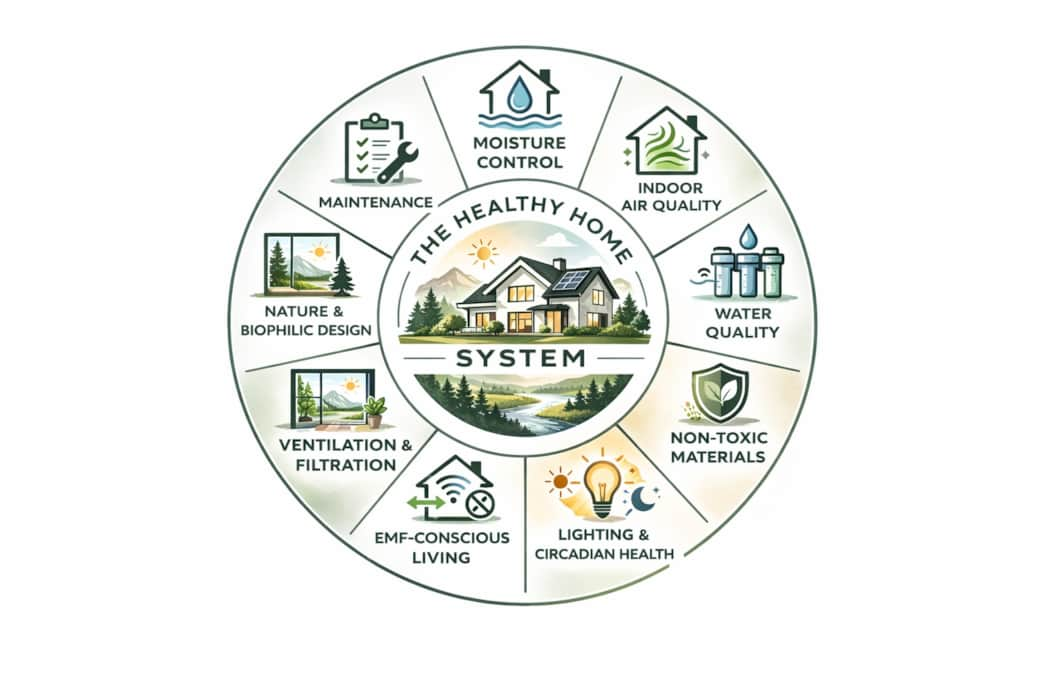
A truly healthy home is a system.
It is a living environment intentionally designed and maintained to:
-
Control moisture
-
Deliver clean, well-ventilated air
-
Provide safe, clean water
-
Minimize chemical exposure
-
Prevent mold and hidden damage
-
Support long-term human health
It integrates building science, environmental health, and proactive maintenance.
A healthy home is one where the structure supports the health of the people inside it — not the other way around.
Foundations of a Healthy Home
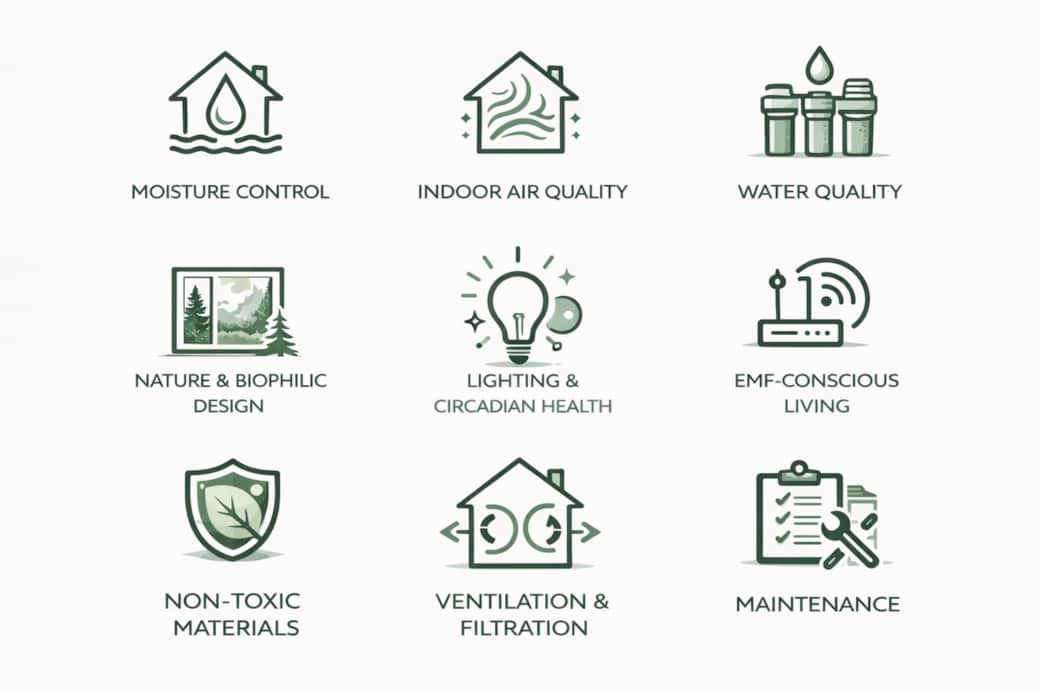
These six systems determine whether a home stays resilient or slowly degrades into a source of exposure.
Moisture Control
Moisture control is one of the most important factors for having a true healthy home. Moisture drives mold. Mold drives air quality problems. Air quality affects health. If you control moisture, you prevent most major indoor environmental issues.
What Moisture Control Means:
Keeping indoor humidity between 35–50%
Preventing bulk water intrusion
Managing condensation
Proper bathroom & kitchen exhaust
Basement and crawlspace moisture control
Signs of Moisture Risk:
Musty odors
Window condensation
Staining on ceilings or walls
Warped flooring
High indoor humidity
Prevention Strategy:
Monitor humidity with a hygrometer
Ensure bathrooms vent outdoors
Maintain gutters and grading
Inspect the attic and basement annually
Moisture control is prevention. Prevention is protection.

Indoor Air Quality
Indoor air is a key factor in a healthy home and healthy living, as it is often 2–5 times more polluted than outdoor air, and many factors influence those pollutants.
A healthy home actively manages:
Particulates (dust, pollen, smoke)
Mold spores
VOCs (volatile organic compounds)
Combustion byproducts
Carbon dioxide buildup
Core Air Quality Systems:
High-efficiency HVAC filtration (MERV 13+ where compatible)
HEPA air purification where needed
Mechanical ventilation (ERV or HRV)
Source control (remove pollution at the origin)
What Matters More Than Air Fresheners:
Filtration
Ventilation
Moisture control
Reduced chemical load
Air quality is a systems issue, not a product issue.

Water Quality
Water is often overlooked in healthy home design. This is why Healthy Home Colorado Springs has Alkagem Onyx Series systems in all of our units (DM us for a discount code)
A healthy home addresses:
Drinking water contaminants
Chlorine and disinfection byproducts
Heavy metals
PFAS (where applicable)
Shower and bathing exposure
First Step:
Test your water.
Possible Interventions:
Under-sink reverse osmosis
Whole-home carbon filtration
Sediment filtration
Water softening (if required)
Water strategy should be data-driven — not fear-driven.

Non-Toxic Materials
A key component of a healthy home is non-toxi materials. Every material inside your home contributes to your chemical load.
Focus on:
Low-VOC or zero-VOC paints
Solid wood over particle board
Avoiding unnecessary fragrance
Formaldehyde-free cabinetry
Natural fiber furnishings where practical
Off-Gassing Is Real — But Temporary
Most VOC emissions decrease significantly over time.
Ventilation and air exchange accelerate this process.
The goal is not perfection.
The goal is to reduce cumulative exposure.

Ventilation & Filtration
Modern homes are tighter — which is good for energy, but risky for air quality and having a healthy home.
A healthy home balances:
Air sealing
Controlled ventilation
Effective filtration
Ideal Setup:
Well-sealed building envelope
Mechanical ventilation (ERV/HRV in many climates)
High-efficiency HVAC filtration
Local exhaust in kitchens and baths
Tight + ventilated = healthy
Tight + unventilated = problematic

Maintenance Systems
A healthy home is not created once — it is maintained.
Core Maintenance Habits:
Change HVAC filters every 2–3 months
Inspect roof and flashing annually
Clean gutters twice per year
Test humidity seasonally
Check under sinks quarterly
Service HVAC annually
Small maintenance prevents major remediation.
EMF-Conscious Home Practices
This is not about alarmism. It is about reducing unnecessary exposure where it is easy and practical to maintain a true healthy home.
Modern homes contain:
Wi-Fi routers
Smart devices
Bluetooth systems
Cell phones
Electrical Panels
While regulatory limits exist, many people choose to reduce nighttime and passive exposure as a precautionary strategy.
Practical EMF-Conscious Steps:
Turn off Wi-Fi at night (manual switch or outlet timer)
Avoid sleeping with phone next to head
Use wired internet for home offices where possible
Keep routers away from bedrooms
Avoid placing smart meters directly behind sleeping areas (in new builds)
Avoid placing electrical panels close to where you sleep - if you can't avoid it we use Satic Shield's FieldShield
These are low-cost behavioral changes that may support:
Sleep quality
Nervous system regulation
Reduced cumulative exposure
This is about intelligent design, not fear.

Biophilic Design & Views of Nature
Human biology evolved outdoors.
Visual connection to nature:
Reduces stress hormones
Improves cognitive performance
Supports emotional regulation
Enhances recovery and sleep
A healthy home intentionally incorporates:
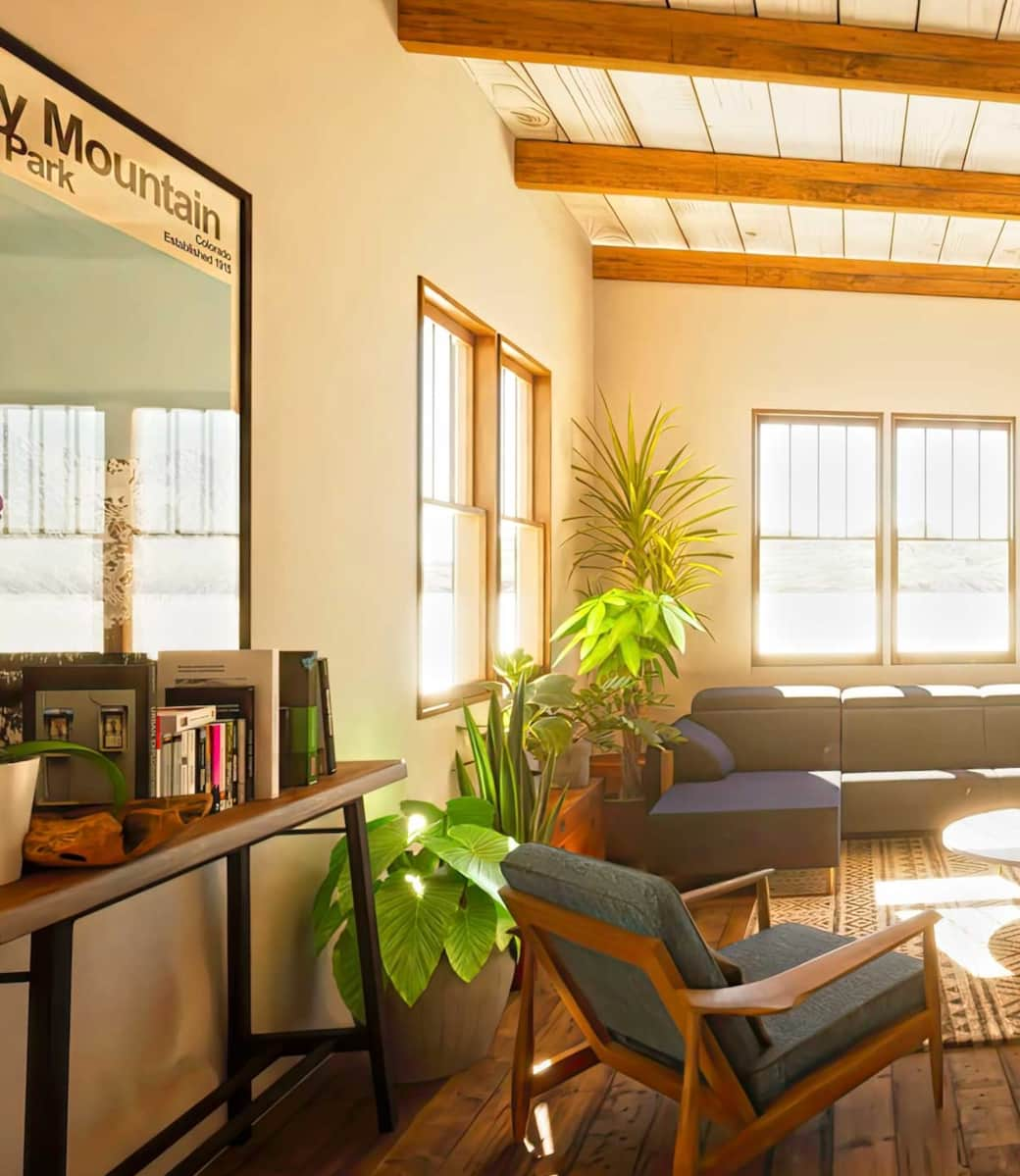
Direct outdoor views (mountains, trees, sky)
Natural materials
Indoor plants (when moisture is controlled)
Access to daylight
If exterior views are limited, integrate:
Landscape photography
Natural textures
Organic materials
Nature-oriented artwork
Design matters physiologically.

Full-Spectrum & Circadian Lighting
Light influences:
Hormones
Sleep
Mood
Immune function
Modern LED lighting often lacks spectrum balance and can overexpose occupants to blue light at night.
A healthy lighting strategy includes:
Daytime:
Full-spectrum lighting where possible
Access to natural daylight
High color rendering index (CRI) lighting
Evening:
Warmer light temperatures
Reduced blue light
Dimmable fixtures
No overhead bright light before bed
Some households incorporate:
Full-spectrum “bio-light” bulbs
Task lighting instead of overhead glare
Smart controls to reduce nighttime intensity
Lighting should follow circadian biology — not convenience alone.
Integrated System Thinking
Moisture affects air. Air affects chemical exposure. Lighting affects sleep. EMF exposure may affect nervous system regulation. Nature views affect stress response. These are not separate issues. They are interacting systems.
A healthy home integrates:
- Building science
- Environmental health
- Biological rhythms
- Preventative maintenance
A healthy home is not a collection of isolated upgrades — it is an interconnected system where each element influences the others. Moisture affects air quality, and air quality influences chemical exposure. Lighting patterns shape sleep cycles, while EMF exposure may affect nervous system regulation. Even views of nature — both inside and outside the home — can influence stress response and overall wellbeing. These are not separate issues addressed one at a time; they are interacting systems that work together to support or undermine healthy living. True healthy living begins when a home intentionally integrates building science, environmental health principles, biological rhythms, and preventative maintenance into one cohesive strategy. When these systems are aligned, the structure itself becomes a foundation for resilience, supporting long-term health instead of quietly contributing to cumulative stress.
Updated Healthy Home System Model
A healthy home intentionally manages:
Structural durability
Air quality
Water quality
Chemical load
Ventilation balance
Maintenance cycles
Electromagnetic exposure
Light spectrum & circadian rhythm
Biophilic design
When aligned, the home becomes:
Supportive instead of stressful
Resilient instead of reactive
Preventative instead of remedial
Small system adjustments create meaningful long-term change. A truly healthy home is not defined by a single upgrade or a checklist completed once. It is an intentionally managed environment where multiple systems work together to support healthy living over time. Structural durability protects the home from water intrusion, material breakdown, and hidden damage that can compromise indoor conditions. Air quality is continuously managed through filtration, ventilation, and source control. Water quality is tested and treated appropriately, ensuring that what flows from the tap supports — rather than burdens — the body.
At the same time, a healthy home considers chemical load from materials and furnishings, balancing practical living with thoughtful product selection. Ventilation is calibrated so that the home is both energy efficient and properly refreshed with clean air. Maintenance cycles are built into the rhythm of the household — filters changed, gutters cleared, attics inspected — preventing small issues from becoming systemic problems.
Beyond the physical structure, the updated model acknowledges modern environmental influences. Electromagnetic exposure is approached with practical awareness — minimizing unnecessary nighttime exposure and designing sleep spaces for restoration. Light spectrum and circadian rhythm are respected, using natural daylight during the day and warmer lighting in the evening to support hormonal balance and sleep quality. Biophilic design — incorporating views of nature, natural textures, and visual access to the outdoors — reduces stress and reinforces the biological connection between humans and their environment.
When these elements are aligned, the home transforms. It becomes supportive instead of stressful. Resilient instead of reactive. Preventative instead of remedial. Instead of constantly addressing problems after they arise, the home quietly works in the background to sustain wellbeing.
Start Here: Your Expanded First Steps
Measure indoor humidity
Replace HVAC filter
Test your water
Turn off Wi-Fi at night
Increase natural daylight exposure
Shift evening lighting to warm tones
Improve bedroom sleep environment
Inspect attic and basement
Building a healthy home does not require a dramatic overhaul. It begins with measurable, practical actions.
Measure indoor humidity and keep it within a healthy range. Replace your HVAC filter and verify that your ventilation systems are functioning properly. Test your water so decisions are guided by data rather than assumption. Turn off Wi-Fi at night to create a lower-stimulation sleep environment. Increase natural daylight exposure during the day and shift evening lighting to warmer tones to support circadian rhythms. Improve the bedroom environment so it becomes a place of restoration, not stimulation. Inspect the attic and basement — the structural bookends of the home — to ensure hidden moisture is not silently undermining indoor conditions.
These small system adjustments, when done consistently, create meaningful long-term change. They compound over time.
Final Perspective
Healthy homes are not built by accumulating more products. They are created through intentional design, measured decision-making, maintenance discipline, and environmental awareness. They require systems thinking — understanding how structure, air, water, light, and daily habits interact.
A healthy home is a structure designed to support the biology of the people inside it. When the structure aligns with human biology — when moisture is controlled, air is clean, light is balanced, exposure is minimized, and maintenance is proactive — health becomes sustainable rather than accidental.
That is the essence of healthy living: designing environments that quietly work in your favor, every day.